Porsche Home Charging
Category
UX Design · Data Visualization · Design Systems
/
1.5-year project designing the home charging experience for Porsche home charger owners, working within a fixed, hardware-dependent API and a genuinely small amount of data, inside an established design system I didn't own myself.

Project
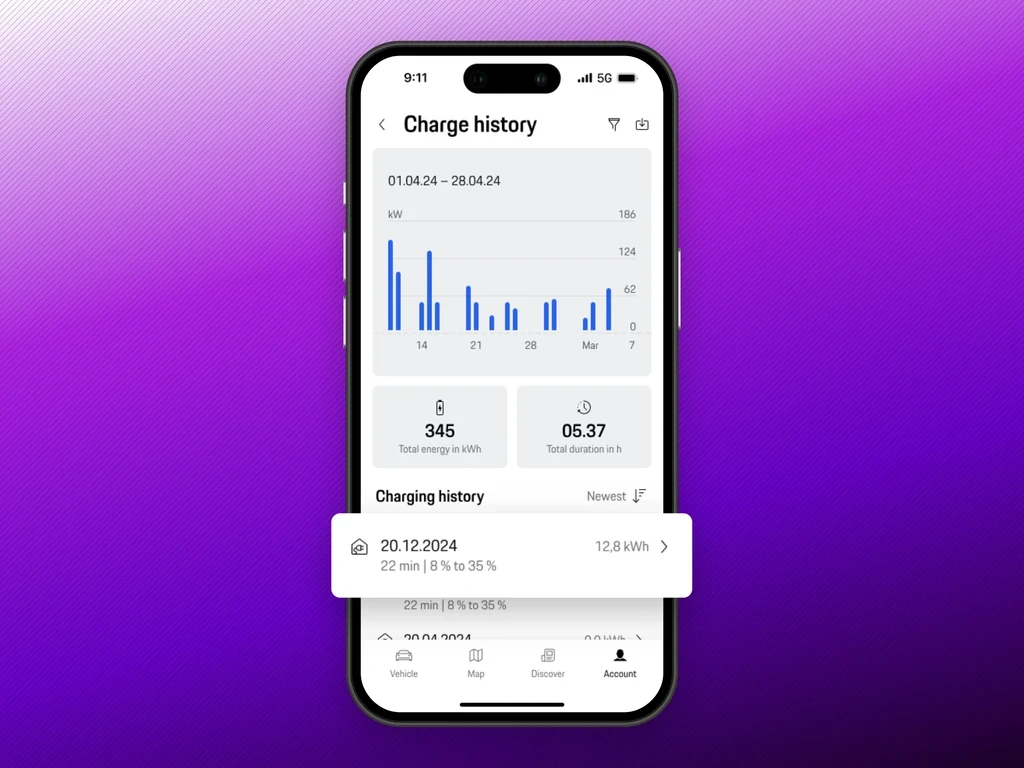
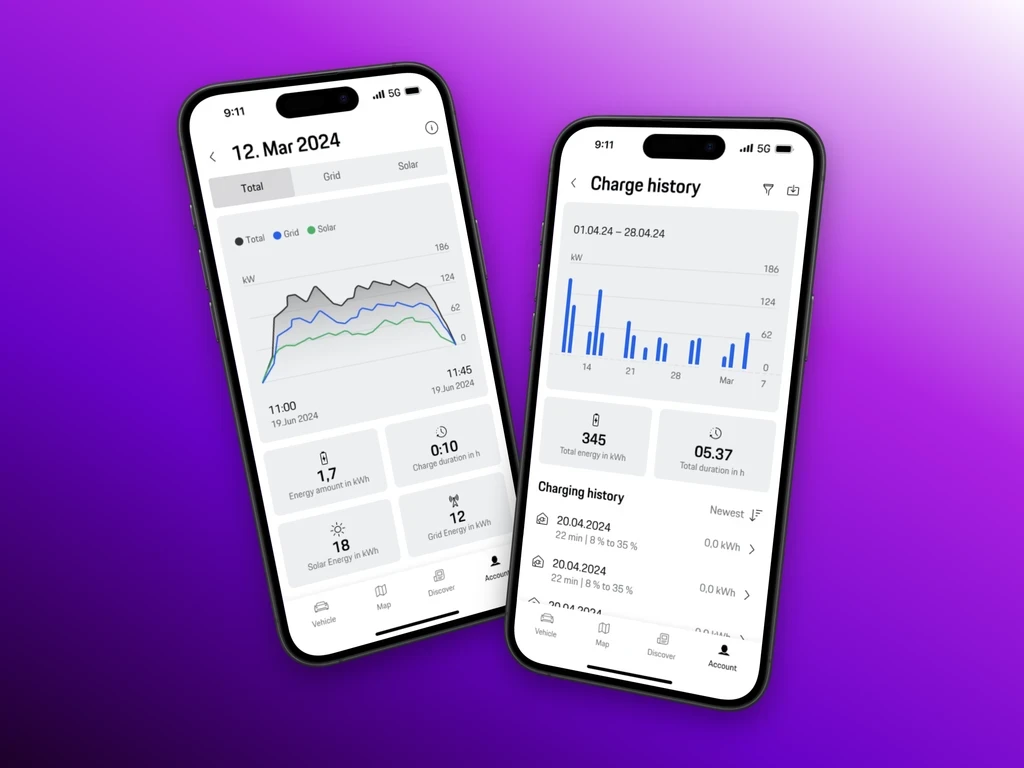
This project was about turning very little data into something clear. The charger's data came from a fixed API tied to the physical hardware — there simply wasn't much to work with, and what existed was easy to make confusing if the design didn't do the work of structuring it. The result focuses on the handful of details that actually matter to a home charger owner: date, duration, state-of-charge change, and energy consumption.
The Role
A separate project from my Porsche events work, and my introduction to working inside a large, already-established product. That meant using shared components, aligning with other teams, and staying consistent with the existing design language while building new pieces — rather than owning or defining the system myself. At this stage I was focused on craft and execution as a UX designer, not yet the systems-level work I'd take on later.
The Challenge
The real constraint wasn't complexity — it was scarcity. A fixed, hardware-dependent API meant the amount of available data was small and couldn't be added to. The challenge was making that limited dataset feel complete and clear, rather than sparse or confusing.
Design Decisions
Simplified instead of padding Rather than trying to embellish a thin dataset, the focus stayed on making the few available details — date, duration, SoC change, energy consumption — as legible as possible on their own.
Used graphs to carry meaning, not decoration Charge levels and energy usage were translated into visual elements so owners could read their charging progress at a glance, rather than parsing raw numbers.
Worked inside an existing system, not around it New components were built to match established shared components and design language — a first real experience of aligning with other teams inside a larger product rather than setting the direction myself.
Outcome
[Add real outcome if available: owner feedback, support ticket reduction, adoption]
A working example of designing for clarity under real data constraints — a skill that carried directly into later, larger-scale systems work
Looking Back
This wasn't a strategy project — it was a craft one. Learning to work well inside someone else's system, under real constraints, before building and owning systems of my own.

